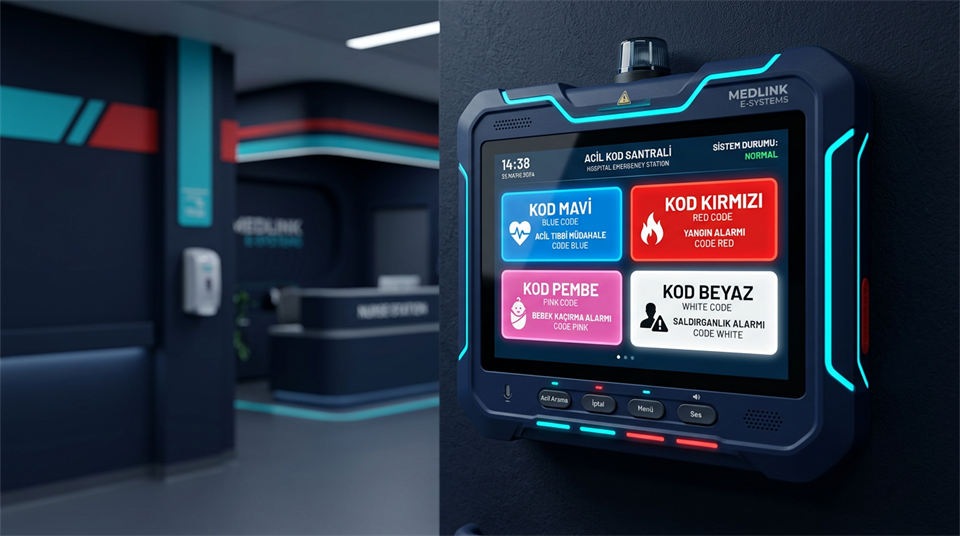
Core unit
Emergency Code PBX server
This is the unit that records the event, distributes the call to the required endpoints and turns every code incident into searchable data.


Blue - Pink - White - Red Code
Logging, reporting and analytics for emergency code calls. Uninterrupted 24/7 operation with compatibility across PBX brands.
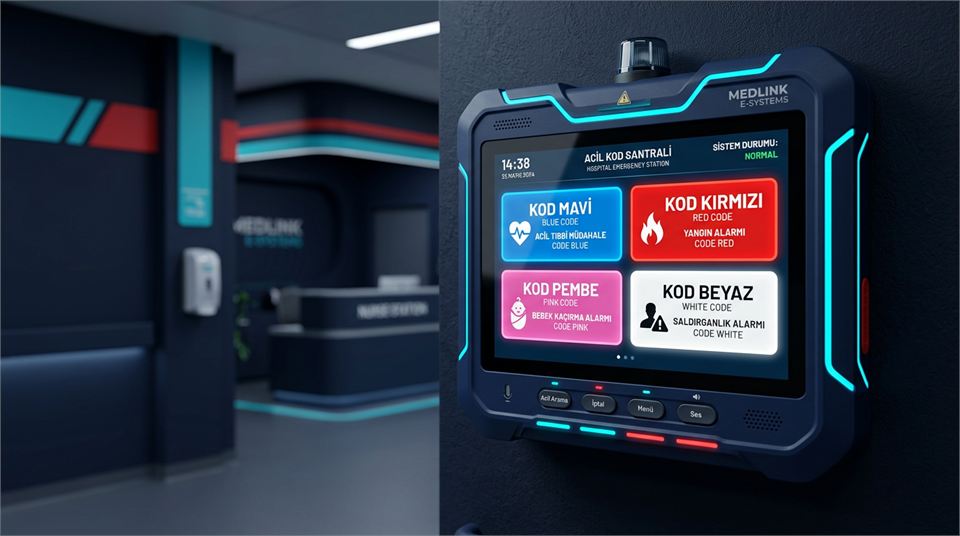
Fire condition
Infant/child abduction attempt
Violence against staff
Need for urgent medical intervention
Analog or IP-based operation
Pager and repeater integration
Logging, reporting and analytics for emergency code calls. Uninterrupted 24/7 operation with compatibility across PBX brands.
The Emergency Code PBX Server records emergency code calls over the local network, keeps reports and generates statistics without the need for an operator or any intermediate personnel. It can also integrate with other automation systems. The unit is designed for uninterrupted 24/7 operation and works with PBX systems of every brand. It is also compatible with hospital information management systems.
Emergency codes are expressed by colors, and the National Color Code standard defines a common number for each code. Blue Code represents a patient or staff member who needs urgent medical intervention; White Code represents violence against hospital personnel; Pink Code represents an infant or child abduction attempt; and Red Code represents fire.
Depending on the type of switchboard already installed in the hospital, the Emergency Code PBX Server can operate on either analog or IP-based infrastructure. With pager and repeater integrations, all related units are informed instantly.
The Emergency Code platform does more than raise an alarm. It keeps the event type, delivery path, response chain and closure time inside one operational backbone. Hover to explore the flow and click to open the product visuals.
The value here does not come from a single box. It comes from a simple architecture that runs PBX integration, field notification and reporting together.
This is the unit that records the event, distributes the call to the required endpoints and turns every code incident into searchable data.
Even when different code types require different teams, the delivery logic stays clear and synchronized, making the incident easier to manage under pressure.
The national color-code approach becomes easier to apply consistently across the hospital.
The event reaches multiple endpoints at the same time, cutting unnecessary human relay.
Every incident is stored with start, end and response information for audits and reviews.
The system adapts to the hospital's existing switchboard investment instead of replacing it.