Panel surface
LCD isolation information panel
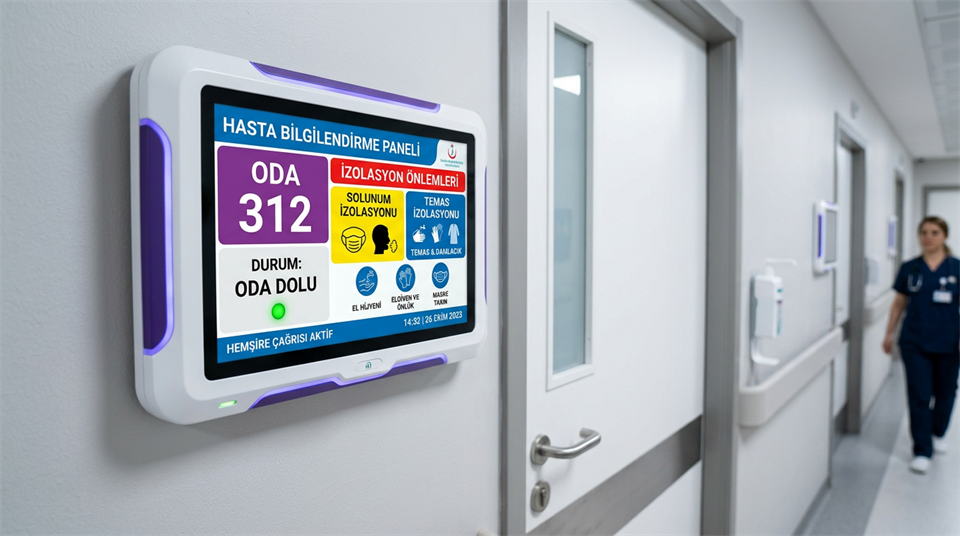
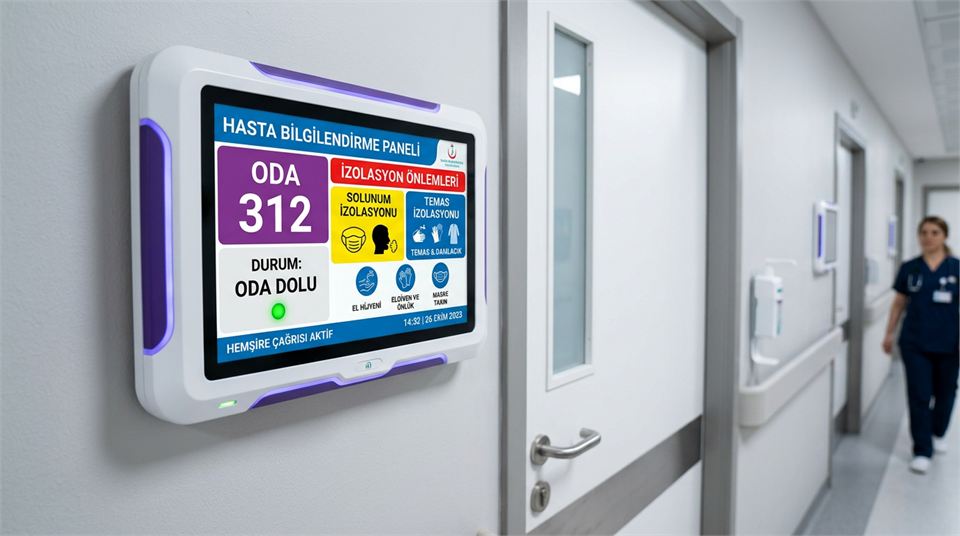
The LCD combines room state, symptom types and busy-state signaling into one calm visual layer that supports corridor decisions without noise.


Wireless patient information
Room occupancy, bed and patient counts, five symptom types and BUSY notification on a single panel.
Room occupancy and bed count display
Five isolation / symptom types
Real-time LCD notifications
BUSY status indication
Server synchronization
Room occupancy, bed and patient counts, five symptom types and BUSY notification on a single panel.
The Patient Isolation Information Panel is a system that provides detailed information about both the room and the patients staying inside it. It visually displays whether the room is occupied or empty together with the number of beds and patients on its LCD screen. The panel can also update the clock by receiving real-time information from the server.
The system supports five different symptom and isolation types: Droplet Isolation, Respiratory Isolation, Fall Risk, Contact Isolation and Immunocompromised Patient. Icons representing these statuses are shown on the LCD together with their descriptions. If more than one symptom is selected, they are displayed sequentially at defined intervals.
When a patient intervention is taking place in the room and entry from outside should be prevented, the LCD shows a visible "BUSY" warning, helping protect both patient safety and privacy.
The Patient Isolation Information Panel turns corridor-side information into a clean communication layer for patient safety, privacy and room-level clinical awareness.
The LCD combines room state, symptom types and busy-state signaling into one calm visual layer that supports corridor decisions without noise.
The real value is not only what the panel displays, but how it guides people toward the right behavior before they enter the room.
Occupancy and room-state information become visible before entry.
Clinical risk cues stay visible at the room entrance.
BUSY signaling helps protect patient privacy during intervention.
Room-side information remains aligned with upstream systems and changes.